

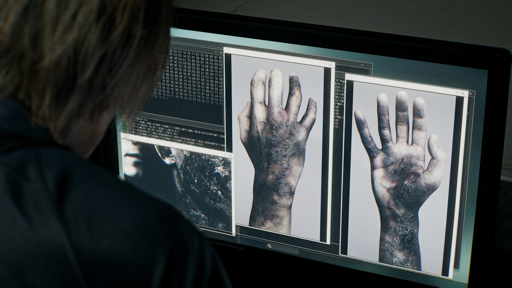
Pirated games have almost always been a superior experience. Games companies hate their customers almost as much as they hate their employees.
hate their customers almost as much as they hate their employees.
Such a sad state of affairs that this is so spot on.
Edit: for these big AAA studios anyway. Im sure indies are better.
Many are better, but there are even worse outliers in the indie scene, for example Chucklefish, who fucked over everyone during development of Starbound.
deleted by creator
I typically wait for a solid sale to get these games, but if the denuvo is still on I might as well sail the high seas just so it runs well. Its kind of fucked up, their anti piracy measure is whats encouraging me to pirate it. Otherwise it would be simpler to just hit the buy button and have steam handle it.

I mean, it looks like there’s a new, not-crazy (afaik) denuvo cracker in the scene, so a fair amount of shocked is appropriate.
Empress was a reason to buy games instead of pirating them lol
This is an atrociously researched and misinformed article.
The cracked Requiem predictably runs faster, smoother, and uses far fewer resources than the HV version, and presumably by extension, than the full paid-for release.
The author is assuming the comparison to the Hypervisor crack applies to the legitimate version with no basis whatsoever. Voices38 themselves only claimed it runs better than the HV version, giving as reasons that the HV driver is hardcoded for a specific configuration that may not match the actual host (cpu cores, cpu instructions, ram) and can degrade performance. [1]
We can and should hate denuvo but since this crack is just a different kind of bypass (a userspace one) we can’t know how the game would run without it and anything else is pure speculation.
[1] https://www.reddit.com/r/PiratedGames/comments/1sh3kvt/comment/of9zt3s
Sure, it’s poorly researched, but we’ve seen it enough times we can make assumptions. Denuvo has a performance impact. Bypassing it removes that. It’s a relatively safe assumption that this performs better than they standard release of the game.
I know that finding this answer is insanely difficult (or, at least, I imagine it is) but I really am left wondering what exactly the DRM is doing while the game is active to have such a process/resource overhead.
Like, async tasks that are holding a thread hostage until it’s sync point? Trying to run huge hash tasks to ensure local storage of game files are “intact”? And seriously, 1.5 - 2GB of RAM utilization? I have to imagine that’s not actually memory in use, but is just holding a giant block of gobbledegook so its harder to reverse?
I’m not a software engineer, so I must be way off the mark, but from my small experience in the dev world as a QA person, the performance uplifts from removing DRM should not be this palpable… Right? I feel sorry for the actual devs who essentially just “find out” that their work is getting quite literally crippled by something that is universally hated by the consumer AND got cracked in 40 days of release.
Based on this, I think it’s a combination of factors. Besides the periodic runtime checks to verify your hardware fingerprint, it also does on-the-fly decryption of some values, and apparently does weird things with the stack. The decryption could have a big impact on memory consumption and performance, depending on the amount of data.
That post says the performance impact in Hogwarts Legacy is negligible (even if their technique for measuring is imperfect), but I suspect that Denuvo is configurable by the dev. Maybe Capcom raised the slider up to 11, but WB kept it lower?